ML-driven infrastructures that transform cross-cultural traditional medical knowledge into structured, testable, and deployable decision systems for modern organisations.
The majority of the world's accumulated health knowledge exists outside of modern analytical frameworks. We build the infrastructure to change that.
Of traditional medical knowledge remains non-digitised or non-standardised — fragmented across languages, oral traditions, and regional practices, limiting systematic evaluation and reproducibility.
Continuous documented use of multi-ingredient formulations across Chinese, Slavic, Ayurvedic, and Indigenous medical systems — representing the world's longest-running natural experiments in human health.
Potential combinations emerging from interaction effects, ratios, and preparation variables — placing traditional formulation design in a high-dimensional optimisation regime that requires computational methods.
Natural substances used in traditional medicine globally, with defined preparation methods, combinations, and contextual constraints that remain largely unstructured in modern analytical systems.
Of documented botanical compounds have been evaluated using modern molecular modelling methods — representing a critical gap between traditional knowledge and evidence-based application at scale.
Synergistic, antagonistic, and context-dependent interactions between compounds are computationally tractable for the first time — unlocking formulation intelligence that scales beyond human intuition.
Selected implementations of our computational framework across product design, knowledge structuring, and formulation systems. Each application reflects the same underlying methodology applied to different problem domains and operational contexts.
A computational framework for structuring, optimising, and evaluating traditional health knowledge. We apply techniques from pharmaceutical drug discovery, quantitative finance, and molecular informatics to the domain of botanical and traditional formulations.
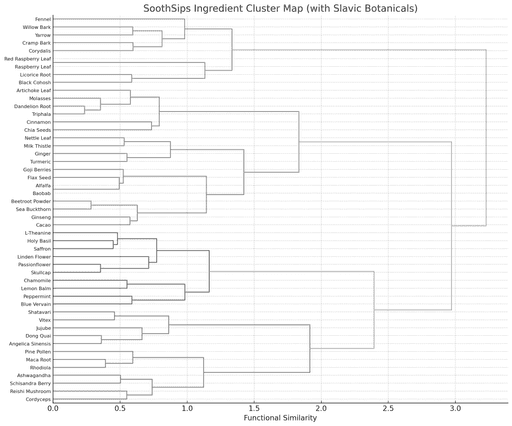
Systematic extraction and normalisation of compound-level data from ethnobotanical literature, clinical databases, and traditional medical texts into queryable knowledge graphs.
Computational docking and affinity scoring of botanical compounds against target receptor panels using validated molecular simulation pipelines.
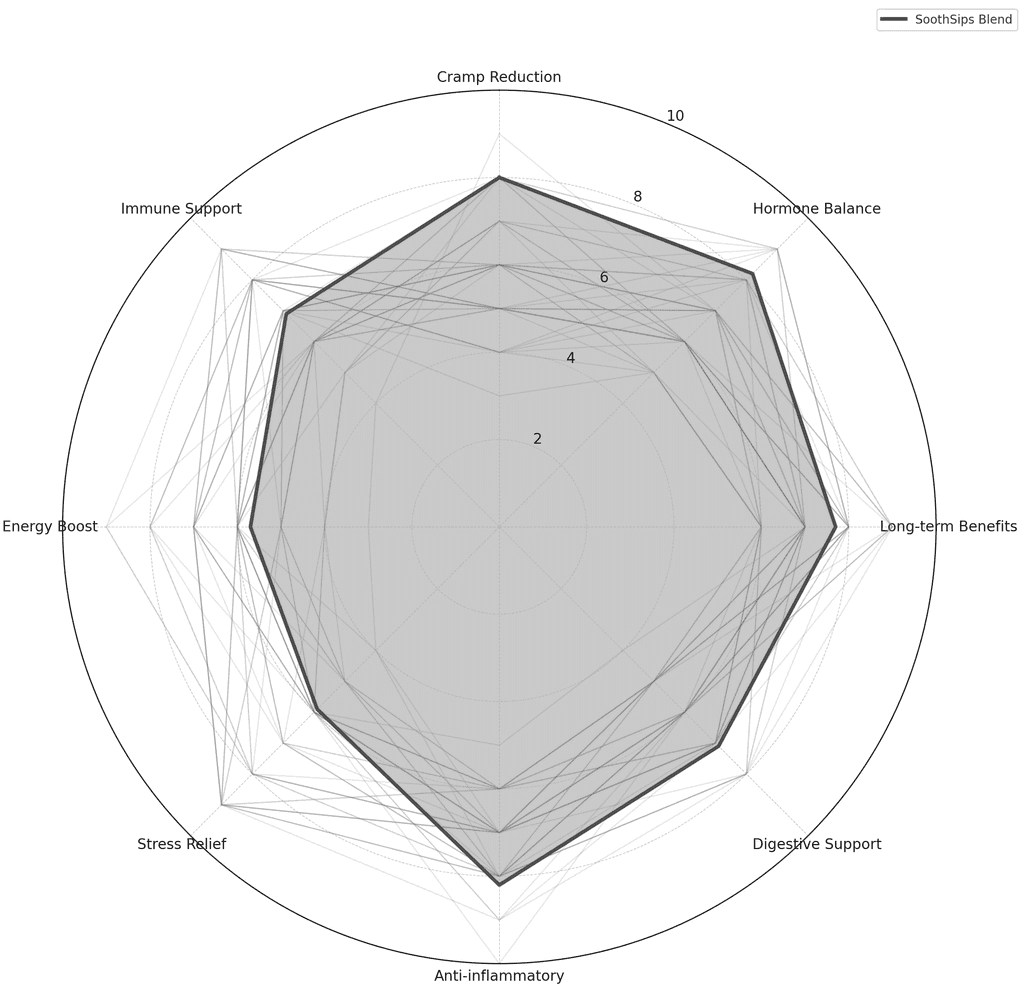
Multi-objective optimisation of compound ratios and preparation variables across high-dimensional interaction spaces, drawing on quantitative methods from portfolio theory.
Structured validation of model outputs against reference datasets, with translation into interpretable, deployable decision systems for operational use.
Short-term engagement focused on problem definition, data assessment, and methodological design. We audit existing knowledge assets and define the appropriate computational approach for your use case.
2–4 WeeksTime-bound build of a prototype system, including modelling, evaluation, and integration planning. Delivers a working analytical pipeline with documented outputs and performance benchmarks.
6–12 WeeksIterative development, expansion, and maintenance of analytical infrastructure. Embedded research partnership with regular delivery cycles and adaptive scope as the system matures.
ContinuousSoothSips is a UK-based research and design initiative focused on computational approaches to traditional and holistic medical systems.
Its scope encompasses the development of analytical frameworks, data models, and system-level methodologies intended to support comparative assessment, evaluation, and integration within contemporary scientific and computational contexts.
Our work sits at the intersection of ethnobotany, molecular informatics, and applied machine learning — translating accumulated traditional knowledge into infrastructure that can operate at modern scale and rigour.